


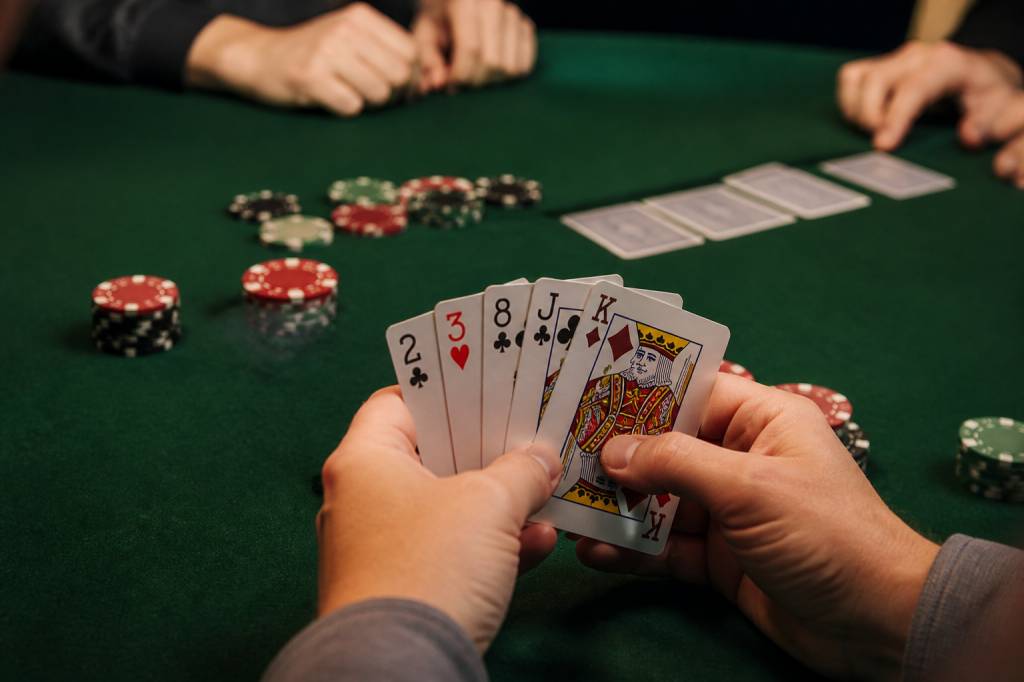
What 5 Card Draw Actually Is
Before we start pretending we’re all old-school poker legends in smoky back rooms, let’s get one thing straight: 5 card draw is one of the simplest poker variants to learn, but it can still punish sloppy play like a dealer with a grudge. The format is refreshingly direct. You get five cards, there’s a round of betting, you can swap some cards, then there’s another round of betting, and the best hand wins.
That’s it. No community cards. No fancy board texture to decode. No endless side quests. Just five cards, a chance to improve, and enough room for bad decisions to become expensive. Which, if we’re honest, is why many beginners love it.
It’s also a brilliant game for learning core poker concepts: hand strength, betting discipline, bluffing, and reading opponents who may be trying to represent something they absolutely do not have. In other words, 5 card draw is poker in its purest “show me what you’ve got” form.
The Basic Rules of 5 Card Draw
The rules are straightforward, which is part of the charm. If you’ve ever felt overwhelmed by more modern poker formats, this one feels like a reset button.
- Each player is dealt five private cards.
- A first betting round begins.
- Players may discard and replace some or all of their cards.
- A second betting round follows.
- Remaining players reveal their hands, and the best five-card hand wins the pot.
Depending on the house rules, there may be blinds or antes. In home games, antes are common because they keep the action moving and make sure no one is sitting there waiting for pocket rockets every orbit of the moon.
In casino or formal settings, the structure can vary slightly. Always check the table rules before you sit down. Poker is already difficult enough without discovering halfway through that the game has a “jacks or better to open” rule no one bothered mentioning.
Hand Rankings You Need to Know
If you’re new, memorize the hand rankings before anything else. I’ve watched beginners chase a flush with the confidence of a man carrying a paper umbrella through a hurricane, only to discover they were drawing dead from the start.
- Royal Flush
- Straight Flush
- Four of a Kind
- Full House
- Flush
- Straight
- Three of a Kind
- Two Pair
- One Pair
- High Card
The important thing in 5 card draw is that there are no community cards. Your hand is your hand. If you end up with one pair, that’s not a “project.” That’s your whole life for that hand. You either improve it or accept that you’re probably behind.
How the Draw Works
This is where the game gets interesting. After the first betting round, players may discard cards and receive replacements from the deck. This is called the draw.
Most of the time, you can choose to discard anywhere from zero to five cards, depending on the table rules. If you already have a made hand like a full house or four of a kind, you usually stand pat, which means keeping all five cards. If you’ve got a weak hand, you may be drawing to improve it.
But here’s the strategic twist: the draw also reveals information. A player who discards one card may be drawing to a straight or flush. A player who discards three cards is likely holding a pair or a weak made hand. Or they could be bluffing with the poker equivalent of a fake mustache. Welcome to the fun.
Starting Hand Strategy for Beginners
Beginners often make the mistake of playing too many hands. In 5 card draw, patience matters. Since you get very little information compared with other poker variants, starting with stronger hands gives you a huge edge.
As a general rule, you want to be selective. Hands worth playing typically include:
- High pairs, especially jacks or better
- Three of a kind
- Strong two pair
- Four-card straight or flush draws in the right spots
- Premium made hands like full houses or better
If you have a low pair, weak kickers, or five random cards with no connection at all, you should be cautious. Yes, you can sometimes improve. Yes, miracles happen. Also yes, the deck does not owe you anything.
A simple beginner mistake is chasing with trash because “it might hit.” Sure, it might. So might a meteor. The question is whether your odds justify the investment.
How Many Cards Should You Draw?
This is one of the most important decisions in the game. The number of cards you draw says a lot about your hand, and your opponents are watching.
If you have a strong made hand, don’t get fancy. Keep it. The more you tinker, the more likely you are to turn a winner into a faceplant.
If you have one pair, your usual draw is to replace three cards. If you have two pair, you normally draw one card. If you have three of a kind, many players draw two cards, hoping to spike a full house or quads. If you have four cards to a straight or flush, one card is usually the draw.
That said, the correct number depends on position, betting action, and the habits of the players at your table. There is no single magic formula. Poker loves punishing rigid thinking.
Bluffing in 5 Card Draw
Now we arrive at the part of the game where people suddenly sit up straighter and start acting like they were born in a western. Bluffing matters in 5 card draw because there are fewer betting rounds and less visible information, which means your story has to be believable.
The classic bluff in draw poker is the “stand pat” line. If you draw zero cards, you’re representing a made hand. That can work especially well if you’ve been betting aggressively and your opponent seems weak or uncertain.
But here’s the trap beginners fall into: bluffing too often, and into too many callers. A bluff only works when your opponent can fold. If someone clearly has a hand they like, your brave little theatrical performance is just an expensive donation.
Good bluffing in 5 card draw is selective. You want to bluff when:
- Your opponent likely missed their draw
- You have a coherent betting story
- The pot is worth stealing
- You’re not facing multiple stubborn callers
And if you’re going to bluff, do it with conviction. No trembling. No overexplaining. Poker players are suspicious by nature, and awkward energy is basically a flare gun.
Reading Your Opponents
One of the most useful beginner skills is learning to pay attention to discard patterns and betting behavior. In 5 card draw, that’s your main source of information.
If a player draws one card and then fires a strong bet, they may have started with a made hand and improved slightly, or they may be trying to represent exactly that. If someone draws three cards and suddenly gets aggressive, they probably hit something useful, but they’re also aware that their story is less convincing than yours on a good day.
Watch for these clues:
- How many cards they discard
- Whether they hesitate before drawing
- Whether their betting changes after the draw
- How often they show down strong hands after drawing few cards
None of this gives you perfect certainty. Poker isn’t a detective novel with a neat final page. But patterns add up. The player who always draws three and overbets after the draw is telling you a story. Your job is to decide whether it’s a confession or a lie.
Common Beginner Mistakes
I’ve made every mistake listed below, which is why I can say with a straight face that they are all wildly unnecessary.
- Playing too many weak starting hands
- Drawing when standing pat is correct
- Chasing improbable hands without pot odds in mind
- Ignoring how many cards opponents draw
- Bluffing in hopeless situations
- Overvaluing one pair after the draw
- Failing to fold when the betting tells a clear story
The most common error is emotional play. You miss a draw, get annoyed, and then decide the next hand is the one where you “get it back.” That is not strategy. That is a small financial crisis wearing a poker face.
Simple Strategy Tips That Actually Help
If you’re just starting out, you do not need a ten-level matrix of mixed strategies and soul reads. You need a few solid habits that keep you out of trouble.
First, play tight. In a game with limited information, strong starting hands matter more than ego. Second, bet your good hands clearly. Don’t slow-play so much that you hand out free cards like party favors. Third, pay attention to the draw. It’s the closest thing you have to a roadmap.
Here are a few practical tips to keep in mind:
- Raise strong hands before the draw to build the pot and narrow the field
- Be cautious with marginal hands against multiple opponents
- Use the number of cards you discard as a clue about your opponents
- Don’t chase every draw just because it “looks close”
- Stand pat with strong made hands more often than not
Also, remember that position still matters. Acting later gives you more information. That’s true in almost every poker game, and 5 card draw is no exception. If someone checks to you after the draw, that silence can be meaningful. Or fake. Poker keeps you humble that way.
A Beginner-Friendly Example Hand
Let’s say you’re dealt K-K-9-5-2. That’s a pretty straightforward spot. You have one pair of kings, which is a hand worth playing. Most of the time, you’d keep the pair and draw three cards.
Now imagine you’re dealt Q-J-10-9-2. You have an open-ended straight draw, depending on the exact game and whether you’re considering the hand before the draw. If the action is light, this can be a playable hand in the right spot. If the table has been betting heavily, however, your “possibilities” may be a bit more fantasy than reality.
One more. You’re dealt A-A-7-4-3. That’s a hand you’re happy to stand pat with. You already have a strong pair, and in many beginner games, that’s enough to win a showdown if the betting doesn’t get too wild.
The lesson? Don’t get dazzled by potential when you already have value. Beginners often overcomplicate decent hands and underplay strong ones. Poker has enough drama without you inventing extra.
Why 5 Card Draw Is Still Worth Learning
Some players dismiss 5 card draw as old-fashioned, but that misses the point. Simplicity is part of its appeal. You learn how to make decisions with limited data. You learn how betting tells work. You learn what it means to protect value and when to apply pressure.
It’s also a great format for home games and casual play because the pace is quick and the rules are easy to teach. And if you enjoy the psychological side of poker, draw games offer a lot of room for deception. Every discard is a clue. Every bet is a message. Every showdown is either vindication or a lesson in humility.
In that sense, 5 card draw is one of the best games for building poker instincts. You won’t be drowning in complexity, but you also won’t get away with mindless play for very long. The game rewards attention, restraint, and just enough courage to pressure people when the moment is right.
Final Thoughts for New Players
If you’re learning 5 card draw, keep your strategy simple at first. Play strong starting hands, understand what the draw means, watch your opponents carefully, and don’t bluff just because you’re bored. Boredom is a terrible poker coach.
Focus on making good decisions rather than flashy ones. The beauty of the game is that small edges matter a lot. One disciplined fold, one well-timed raise, or one correctly read draw can swing the entire session.
And if you do make a mistake? Good. That means you’re learning. Just try to make the cheap mistakes early, and the expensive ones less often. That’s the real beginner’s edge in poker: surviving long enough to get smarter than the version of yourself who thought “I’ll draw five and see what happens” was a plan.