


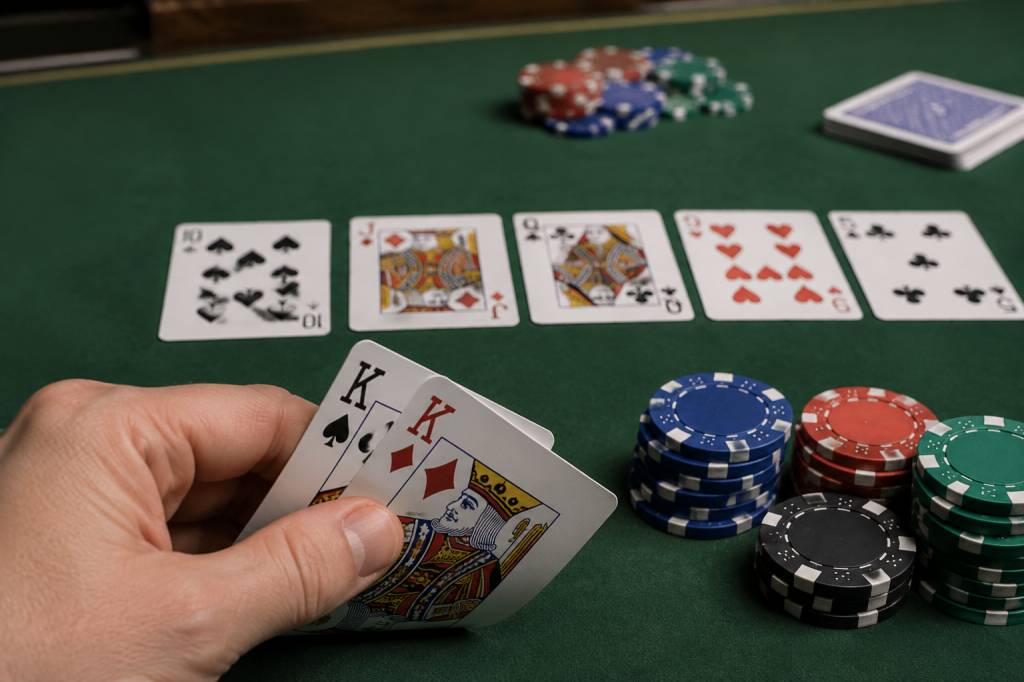
In poker, few hands create quite the same mix of excitement and danger as a boat. It sounds friendly enough, but at the table, a boat can sink an opponent’s stack before they realise the tide has turned.
A boat is poker slang for a full house: three cards of one rank combined with two cards of another rank. For example, three kings and two sevens make a “kings full of sevens”. It is one of the strongest made hands in most poker games, sitting above a flush and below only four of a kind, a straight flush and a royal flush.
That strength makes a full house thrilling to play. It also makes it dangerously easy to overplay. The hand may look like a luxury yacht, but not every boat is seaworthy. The key is understanding what your full house actually beats, what can beat it, and how your opponent’s actions reveal the strength of their hand.
What exactly is a boat in poker?
A full house contains five cards made up of:
- Three cards of the same rank, known as the three-of-a-kind part.
- Two cards of another matching rank, known as the pair part.
Suppose your best five-card hand is ace-ace-ace-eight-eight. You have aces full of eights. The first rank describes the trips, while the second rank describes the pair.
This wording matters because full houses are ranked first by their three-of-a-kind component. Aces full of anything beats kings full of anything. If both players have the same trips, the pair decides the winner. For example, queens full of jacks beats queens full of tens.
It is worth remembering that poker hands use the best five cards available. In Texas Hold’em, you combine your two hole cards with the five community cards, but you do not have to use both hole cards. Sometimes the board itself produces a full house, which can create a split pot or a deceptively strong-looking hand.
How strong is a full house?
A full house is normally a monster. It beats:
- One pair
- Two pair
- Three of a kind
- A straight
- A flush
However, it loses to:
- Four of a kind
- A straight flush
- A royal flush
In practical terms, boats win a great deal of money because players often struggle to fold strong hands against them. A player holding a flush may feel invincible until your supposed “harbour cruise” turns into a financial shipwreck.
Still, “full house” is not a magic password that guarantees victory. The difference between a powerful boat and a vulnerable boat can be enormous. A small full house on a paired board may be miles behind a larger full house, especially when the betting becomes aggressive.
The different ways to make a boat
In Texas Hold’em, you can make a full house in several common ways.
Using a pocket pair with a three-of-a-kind on the board: If you hold pocket sevens and the board comes king-king-king-four-two, your best hand is kings full of sevens. You have used the three kings on the board and your pocket pair as the matching two.
Using a pocket pair with a matching pair and a set: Holding pocket nines on a board of nine-four-four-jack-two gives you nines full of fours. Your pocket pair contributes to the pair, while your nine combines with the board nine to create trips.
Using a hole card with a paired board: If you hold ace-nine and the board is ace-ace-nine-five-two, you have aces full of nines. This is a strong example because your ace makes the trips and your nine supplies the pair.
Playing the board: If the board reads queen-queen-queen-eight-eight, every player has queens full of eights unless someone can make a better hand using their hole cards. This is where players sometimes celebrate too early. A full house is impressive, but if everyone has the same five-card hand, there is no private advantage to exploit.
Understanding the hierarchy of full houses
Not all boats deserve the same level of confidence. Imagine two players holding:
- Player A: king-seven on a board of king-king-seven-seven-two
- Player B: ace-two on the same board
Player A has kings full of sevens. Player B has kings full of twos? Actually, the best five-card hand for Player B is kings full of twos, using the three kings and the pair of twos formed by the hole card and board. Player A wins because both players have kings for trips, but sevens beat twos as the pair component.
Now change Player B’s hand to king-two. The board still contains king-king-seven-seven-two. Player B has kings full of sevens using the board, while Player A also has kings full of sevens. The result is a split pot.
These details may sound fussy, but poker is a game where one card can turn a champagne celebration into a request for a taxi home. Always identify the exact five-card hand before deciding how much confidence to show.
Why the paired board changes everything
A full house usually appears when the board is paired. That pairing is both good news and a warning sign.
If you hold a set on a board that pairs, you may have improved to a boat. For example, you hold pocket eights and the flop is eight-jack-four. If the turn is jack, you now have eights full of jacks. It feels excellent, but you must check whether the board’s pair has created a bigger full house for someone holding a jack.
This is one of the most important full-house principles: when the board pairs, a player with a higher card matching that pair may have the superior boat.
Consider pocket tens on a board of ten-six-six-six-two. You have sixes full of tens. It is a full house, but any opponent holding a ten has tens full of sixes, which is much stronger. If an opponent holds pocket sixes, they have four of a kind. Suddenly your boat is no longer the captain of the ship; it is merely holding a life jacket.
How to play a strong boat wisely
The first instinct with a full house is often to bet immediately and as heavily as possible. That instinct is understandable. It is also how players frighten away all the hands they wanted to keep in the pot.
Against a cautious opponent, a smaller bet may earn more value than an oversized shove. A player with a flush, straight or top pair may call a sensible wager but fold instantly to an all-in bet. Ask yourself: What worse hands can realistically call me?
If the answer includes strong flushes, lower full houses, trips or an overpair, betting for value makes sense. If only better hands call a huge raise, the giant bet may be less profitable than it looks.
Position also matters. Acting later allows you to see whether your opponent checks, bets or raises before you commit chips. In position, you can often control the size of the pot while extracting value. Out of position, consider whether a check-raise or a smaller lead will keep weaker hands interested.
When slow-playing makes sense
Slow-playing means disguising a strong hand by checking or calling rather than raising immediately. With a full house, this can be effective when:
- The board is relatively safe and unlikely to produce a better hand.
- Your opponent is aggressive and likely to bluff.
- They have shown a clear willingness to bet with weaker hands.
- A large raise would make your hand obvious.
For example, you flop a full house with pocket fives on a board of five-king-king. If your opponent has been firing at every street, a call may allow them to continue bluffing or value-betting a king. Raising can still be correct, particularly if draws or worse boats are possible, but there is no prize for making your opponent fold instantly.
Slow-playing is not an automatic strategy. On a wet board, where a straight flush draw or a higher boat may be possible, giving a free card can be expensive. Poker rewards deception, but it does not reward theatrical stubbornness.
When to bet aggressively
Strong betting is often preferable when the board is dangerous or when your opponent’s range contains many hands that can pay you.
Suppose you hold ace-jack and the board is ace-ace-jack-ten. You have aces full of jacks. There are plenty of possible calls from an ace, a jack, a ten, or perhaps a straight draw that refuses to leave the table despite several polite hints. Betting protects your hand and builds the pot.
You should also raise more confidently when:
- The board contains possible flush or straight draws.
- Your opponent is showing clear strength.
- You can be called by lower full houses or trips.
- The pot is multiway and several players may have connected with the board.
In a multiway pot, be more careful about assuming your boat is best. More players mean more combinations of strong hands. A full house that looks enormous heads-up may be much less comfortable against three opponents.
Reading an opponent who represents a boat
When an opponent suddenly becomes very enthusiastic on a paired board, do not assume they are bluffing. Some players spend an entire session quietly calling, then discover a full house and begin betting as if they have been personally insulted by the dealer.
Look at the betting pattern. Did they raise before the flop with a pocket pair or a high card that could now make trips? Did they call on a draw-heavy flop and become aggressive after the board paired? Does their line make sense with a full house, or are they trying to tell a story that has more holes than a badly played straight draw?
Against a large raise, compare your boat with the likely combinations available. A lower full house may be worth a value call or re-raise. A small boat on a board where higher trips are possible may need caution. If the action strongly represents four of a kind or a higher full house, folding can be correct, even when it feels like throwing a winning lottery ticket into the bin.
Common mistakes with full houses
Assuming every boat is unbeatable: Full houses lose to quads and higher full houses. Rank yours precisely before celebrating.
Ignoring the board texture: A paired, monotone board can contain more danger than a dry board. Possible straight flushes are rare, but “rare” does not mean “impossible”.
Overbetting too quickly: A huge bet may chase away hands that would have paid you over several streets.
Failing to identify a split pot: If the board provides the same best five-card hand to everyone, your impressive-looking boat may only earn half the pot—or a quarter in a crowded hand.
Folding too easily to action: The opposite mistake is being so frightened of a higher boat that you never collect value from weaker hands. Poker is about ranges and probabilities, not horror films starring the one hand that beats you.
A simple decision process at the table
When you make a boat, pause before reaching for your chips. Run through this quick checklist:
- What is the exact rank of my full house?
- Which worse hands can call a bet?
- Which better hands are realistically possible?
- Does the board contain a possible straight flush or four of a kind?
- Am I playing against one opponent or several?
- Would a smaller bet keep weaker hands involved?
- Is my opponent’s aggression consistent with a genuine strong hand?
This short pause can prevent both major errors: missing value and paying off a monster. It also gives you time to avoid the classic poker reaction of staring at your cards as if they have personally betrayed you.
Bankroll discipline still matters
A boat can create a large pot, but it should not encourage reckless betting beyond your normal bankroll limits. Strong hands are part of poker’s appeal, yet variance remains a constant companion. Even a full house can lose, and even the best decision can produce a bad result.
Play within limits you can comfortably afford, avoid chasing losses, and remember that responsible betting is a skill just as important as reading a board. The goal is not to win every hand. The goal is to make decisions that remain profitable over time.
Final thoughts on playing the boat
A boat is one of poker’s most rewarding hands, but its real value depends on context. Learn to distinguish aces full from a modest board-made full house. Watch for higher trips, possible quads and straight-flush threats. Choose between slow-playing and aggressive value betting based on your opponent, the board and the hands that can realistically continue.
Most importantly, do not let the excitement make your decisions for you. Enjoy the moment, collect the chips when the situation calls for it, and keep enough discipline to fold when the supposedly unsinkable boat has finally met an iceberg.