


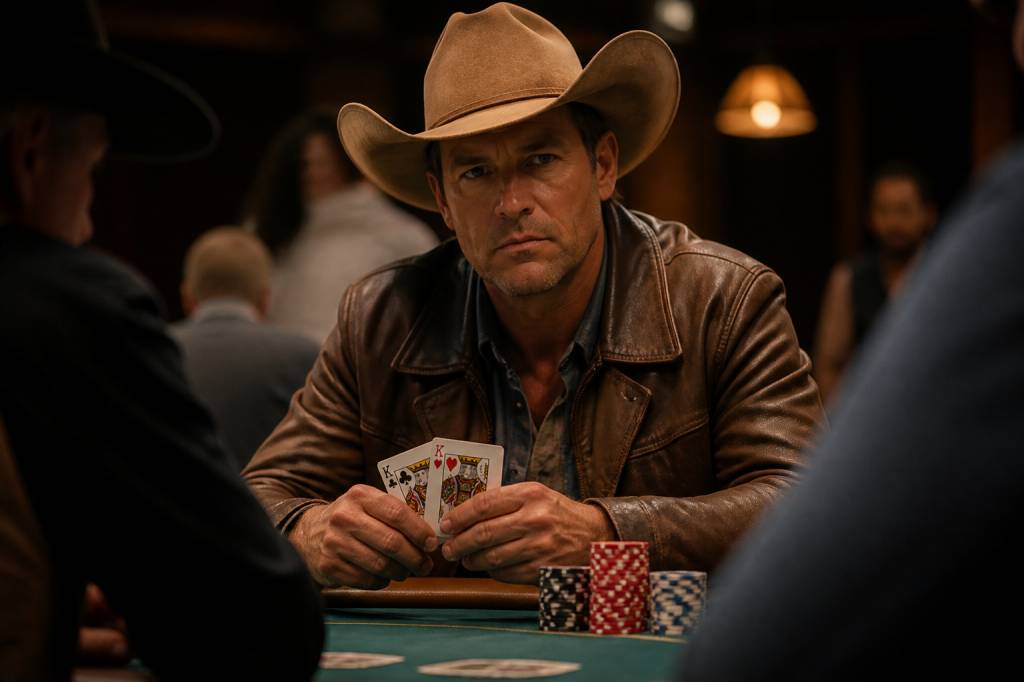
There are few sights in poker more beautiful than being dealt pocket kings. Two proud cowboys, standing shoulder to shoulder, ready to ride into battle. They are strong, confident and usually worth a serious investment. They are also one of the easiest hands to misplay.
That may sound strange. Surely pocket kings are a hand you simply raise, watch everyone panic and collect the chips? In an ideal world, perhaps. At a real poker table, kings can win a mountain of money—or become an expensive second-place trophy when an ace appears on the flop.
My goal with pocket kings is not merely to “protect” them. It is to extract maximum value from worse hands while making life difficult for opponents who hold the few combinations that can genuinely hurt me. That requires a plan, not a nervous glance at every ace on the board.
Why pocket kings are powerful—and awkward
Pocket kings are the second-best starting hand in Texas Hold’em, behind pocket aces. Before the flop, they are ahead of almost every other hand. Pairs such as queens, jacks and tens are in serious trouble, while hands like ace-king, ace-queen and suited connectors need to improve to catch up.
The awkward part is psychological. Players often treat kings in one of two extreme ways:
- They play them too passively because they are terrified of an ace.
- They play them too aggressively, shoving chips into the middle without considering position, stack sizes or the opponents involved.
Both approaches leave money on the table. Pocket kings deserve confidence, but confidence is not the same as autopilot. The cards are excellent; the decision-making still matters.
My pre-flop plan: build the pot with purpose
In an unopened pot, I almost always raise pocket kings. The exact size depends on the game and table, but a raise between 2.5 and 3 big blinds in a standard online cash game is a sensible starting point. In a live game, where players call wider and sizing tends to be larger, I may choose 3 to 4 big blinds.
The objective is simple: get called by worse hands and charge speculative hands to continue. Pocket sevens, ace-queen, king-queen suited and even certain weaker aces can all make mistakes against kings. A limp or tiny raise gives them a cheap invitation to realise their equity.
That does not mean raising wildly. If I open to 8 big blinds with every premium hand, observant opponents will quickly notice that my “cowboys” arrive with a marching band. Balanced sizing keeps the story believable.
When facing a 3-bet
A 3-bet after my opening raise is usually good news. It often represents a range containing hands such as ace-king, ace-queen suited, queens, jacks and, depending on the player, some ambitious bluffs. Kings perform extremely well against that collection.
Against a normal 3-bet, I generally call or 4-bet. The best option depends on the opponent:
- Against a loose or aggressive player: calling can keep bluffs and dominated hands in the pot.
- Against a straightforward player: a 4-bet may be better because their range is weighted toward strong hands that will still continue.
- With shallow stacks: getting the money in pre-flop becomes more attractive.
- With very deep stacks: pot control and position deserve more attention, especially against a tight opponent.
One of my favourite spots is holding pocket kings in position against an aggressive 3-bettor. Calling keeps their bluffs alive and allows them to continue firing on boards they completely missed. If I 4-bet immediately, I may win the pot—but I also give them an easy escape route with the hands I wanted to keep around.
Of course, there are players whose 3-bet range is practically carved into stone. If a quiet opponent who has played one hand in an hour suddenly 3-bets from early position, pocket kings remain strong, but the situation deserves respect. Poker is not played against cards alone; it is played against ranges and people.
Should I ever fold pocket kings pre-flop?
Yes, although it should be rare. “Never fold kings” sounds brave until three players are all-in and the action comes back to you. Then it sounds more like something printed on a novelty T-shirt.
In a typical cash game, folding kings before the flop is unusual because opponents can have queens, ace-king and bluffs. In a tournament, however, stack depth, payout pressure and action can change everything. If a tight player opens, another tight player 3-bets and a third player moves all-in, the combined range may be heavily concentrated around aces.
I would not fold simply because an opponent appears confident. I would look at:
- The number of players showing strength.
- Their tendencies and previous actions.
- Effective stack sizes.
- Tournament stage and pay-jump pressure.
- Whether the action makes sense for hands worse than kings.
The key is not to turn kings into a sacred object. They are a premium pair, not a legally binding contract to lose your entire stack.
4-betting for value without scaring everyone away
When I decide to 4-bet, I want the sizing to create calls from worse hands while avoiding a dramatic overbet. If I open to 3 big blinds and face a 3-bet to 9 or 10 big blinds, a 4-bet to around 21–24 big blinds is often practical in position. Out of position, I may size slightly larger.
Why not simply shove? Because a shove often folds out everything I dominate. Ace-king may disappear. Queens may decide they have suddenly developed an interest in gardening. Bluffs certainly vanish. The hands that continue are frequently aces or, occasionally, another pair of kings.
Maximum value comes from giving worse hands room to make a mistake. A measured 4-bet keeps those mistakes possible.
There are exceptions. With 25 or 30 big blinds behind, a pre-flop all-in can be perfectly standard. The shorter the effective stack, the less useful fancy post-flop manoeuvring becomes. At that point, the cowboys are wearing helmets and heading straight for the middle.
The ace on the flop: panic or information?
The ace-high flop is where many players lose their discipline. They see an ace, mentally hand the pot to someone else and begin composing a sad story about the day pocket kings betrayed them.
An ace on the flop is important information, but it does not automatically mean you are beaten. Your opponent may hold queens, jacks, a flush draw, a straight draw or simply nothing at all. The correct response depends on the action and the board texture.
Imagine opening with pocket kings and being called by one player. The flop comes A♠ 7♦ 2♣. If you check and your opponent checks behind, you may still have the best hand. If you bet and they call, you need to reassess. If they raise strongly, their range becomes more concerning—but even then, some players attack ace-high boards far too enthusiastically.
Against one opponent, I often make a small continuation bet on a dry ace-high board, perhaps 25% to 33% of the pot. This sizing pressures hands such as queens and jacks without risking a huge chunk of chips. It also allows me to represent a wide range of ace-x hands.
Checking is also valuable, especially against aggressive opponents who are happy to bluff when weakness appears. A check-call can keep bluffs in while controlling the pot. The trick is to avoid making one automatic decision on every ace-high flop.
When the flop is safe
On a low or disconnected flop, pocket kings are often in excellent shape. Consider 8♣ 4♦ 2♠. There are few natural hands that beat you. Sets are possible, but rare. Your opponent can continue with pocket pairs, ace-high floats, backdoor draws and the occasional hand that simply refuses to believe you have anything.
This is where I prefer betting for value rather than trying to trap every opponent. A bet of 40% to 60% of the pot can be effective, depending on the board and the number of players. Worse pairs may call, and drawing hands are forced to pay.
Multiway pots require more caution. The more opponents involved, the more likely someone has connected with the board. Pocket kings are still strong, but a hand that is comfortably ahead heads-up may be less secure against three callers. Value betting remains possible; blind aggression does not.
Playing kings on coordinated boards
Boards such as J♥ 10♥ 8♣ are uncomfortable because many hands connect. Your kings may still be ahead, but the number of dangerous turns and rivers increases. This is not the time to pretend the board is a blank canvas.
I consider several questions:
- How many draws does my opponent realistically have?
- Which worse hands will call a large bet?
- Am I in position?
- Can a turn card make continuing difficult?
- Does my opponent raise draws, made hands or only the absolute nuts?
A smaller bet can keep weaker made hands involved while limiting the cost of being raised. Against a passive player, a raise on this texture deserves more respect. Against an experienced aggressive player, folding every overpair to pressure would be an expensive habit.
Do not confuse discomfort with defeat. Poker would be remarkably easy if every difficult board meant you should fold.
Extracting value on the turn and river
The turn is often where maximum value is created. If the board remains safe and your opponent has called the flop, continue betting with a size that worse hands can realistically call. A common mistake is using tiny bets because players are afraid to lose the pot. Another is overbetting so dramatically that only better hands continue.
Suppose the board is 9♠ 6♦ 3♣ 2♥ and you hold pocket kings. This is a great spot to bet for value against nines, tens, jacks, straight draws and stubborn ace-high hands. A bet around 60% to 75% of the pot can be appropriate, particularly against a player who calls too often.
On the river, value betting becomes a question of worse hands calling. If the river completes an obvious flush or straight, slow down. If it is a harmless brick, ask whether your opponent can call with a pair below kings. If the answer is yes, betting is often better than checking and hoping they bluff.
I have lost count of the number of times I checked back the river with an overpair, convinced I was being clever, only to watch my opponent reveal a smaller pair. The lesson was painful but useful: sometimes “pot control” is simply fear wearing a waistcoat.
Using blockers and table image
Holding two kings gives you useful information about the deck. You block pocket kings, naturally, and reduce the combinations of strong king-x hands your opponent can hold. If one of your kings is suited, you may also block some powerful flush combinations.
Your table image matters too. If you have been playing cautiously, a 4-bet from you may receive too much respect. If you have been active and caught bluffing, opponents may pay off lighter. Neither image is permanently good or bad. The goal is to understand how your recent actions influence the calls you receive.
Sometimes I will show down kings after a carefully sized value line, and an opponent will groan, “Of course.” That is not a complaint; it is feedback. If they believe I only bet big with monsters, I can later exploit that image with well-timed bluffs. Every hand contributes to the table’s ongoing story.
A practical checklist for pocket kings
Before committing a large portion of your stack, run through a quick mental checklist:
- What is my position?
- How deep are the effective stacks?
- Who is showing interest, and what does their range look like?
- Am I raising for value or simply trying to protect myself?
- Which worse hands can call my bet?
- What board cards improve my opponent’s likely range?
- How will I respond if an ace arrives?
This process takes only a few seconds once it becomes familiar. It also prevents emotional decisions. Pocket kings can make even experienced players feel invincible before the flop and terrified after it. A plan keeps both feelings under control.
Respect the hand, not the mythology
Pocket kings are powerful because they begin ahead of nearly every hand. They are profitable when played assertively, thoughtfully and with attention to context. They are not profitable when treated as an excuse to ignore position, ranges or board texture.
My preferred approach is straightforward: raise for value, 4-bet when worse hands can continue, keep bluffs alive against aggressive opponents and do not surrender automatically when an ace lands. Bet confidently on safe boards, adjust on coordinated textures and make river decisions based on what can actually call.
And if the ace appears immediately? Take a breath. The cowboys have not necessarily been thrown from their horses. Read the action, trust the range analysis and remember that one unpleasant board does not rewrite the strength of your starting hand.
Play pocket kings like a premium hand—not like a guaranteed win. That small distinction is where much of the value lives.
As always, keep poker entertaining and play within your limits. The best strategy in any game is one that leaves you happy to return for the next hand.