


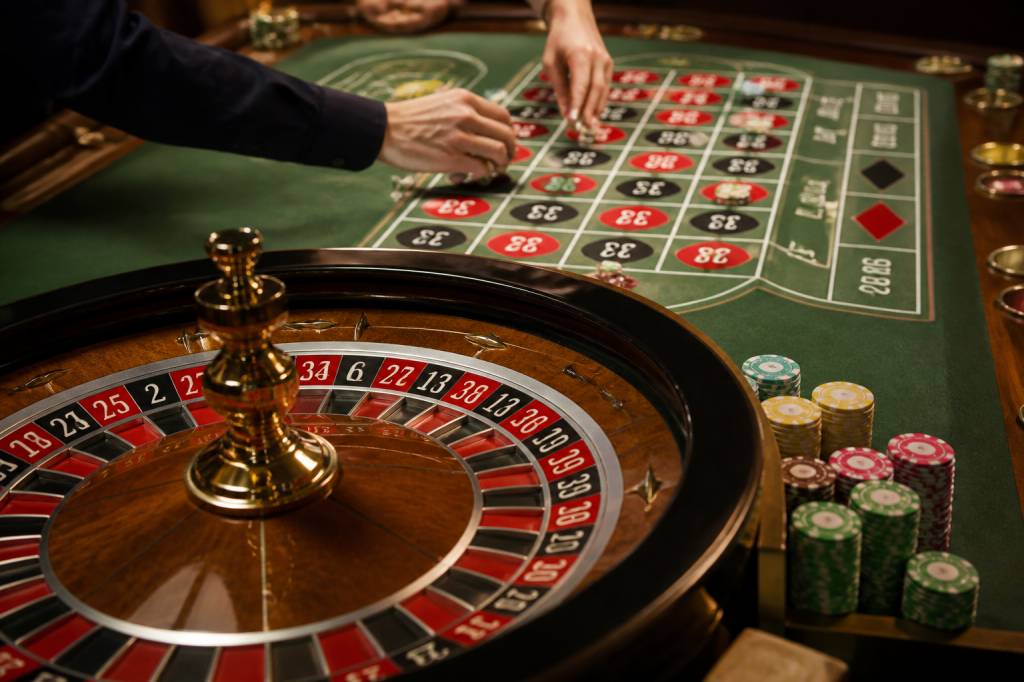
French roulette has a reputation for elegance, discipline, and the occasional dramatic sigh when the ball lands one number away from your carefully planned wager. With its single zero, classic table layout, and traditional betting language, it is often considered one of the fairest roulette variants available to players.
But what exactly makes French roulette different, and how should you place your bets? This guide explains the main French roulette bets, how payouts work, the impact of the La Partage rule, and the practical habits that can help you make more informed wagers. There is no magic system that guarantees profit—if there were, casinos would be operating from cardboard boxes—but understanding the game can help you play with greater confidence and control.
What makes French roulette different?
French roulette uses a wheel with 37 pockets: numbers 1 to 36 and a single zero. That single zero matters. American roulette includes both zero and double zero, creating a higher house edge. On a standard French roulette table, the casino advantage on even-money bets can be reduced further by the La Partage rule.
The game also uses several traditional betting terms, many of them in French. The language may sound intimidating at first, but the underlying wagers are straightforward. You can bet on individual numbers, groups of numbers, colours, ranges, or specific sections of the wheel.
French roulette is usually associated with the following features:
- A single zero rather than zero and double zero.
- Even-money bets such as red, black, odd, even, 1–18, and 19–36.
- The La Partage rule on qualifying even-money bets.
- Traditional French table calls and betting sectors.
- A house edge that can be as low as 1.35% on certain wagers.
That final point is important. French roulette is not a game in which every bet has identical mathematical value. The type of wager you choose can make a meaningful difference over time.
Understanding the roulette layout
The table is divided into two broad areas. The main betting grid contains the numbers from 1 to 36, arranged in three columns. Outside the grid are the even-money bets and range bets.
The inside bets cover smaller groups of numbers and generally offer larger payouts. The outside bets cover more outcomes and pay less, but they usually win more frequently.
Here are the main outside options:
- Rouge: betting that the ball lands on red.
- Noir: betting that the ball lands on black.
- Pair: betting on an even number.
- Impair: betting on an odd number.
- Manque: betting on numbers 1 to 18.
- Passe: betting on numbers 19 to 36.
Each of these normally pays 1:1. Place £10 on red and win, and your profit is £10, plus your original stake. The zero is neither red nor black, neither odd nor even, and neither low nor high. That is where the casino gets its edge.
Inside bets and their payouts
Inside bets are placed directly on the numbered section of the table. They are more concentrated than outside bets, so they win less often but pay more when successful.
- Straight-up bet: one number, paying 35:1.
- Split bet: two adjacent numbers, paying 17:1.
- Street bet: three numbers in a horizontal row, paying 11:1.
- Corner bet: four numbers meeting at a corner, paying 8:1.
- Six-line bet: six numbers across two adjacent rows, paying 5:1.
Suppose you place £5 on number 17 as a straight-up bet. If 17 appears, you receive £175 in winnings and keep your £5 stake, giving a total return of £180. If any other number appears, the wager disappears faster than a poker player’s confidence after bluffing into the nuts.
Inside bets can be entertaining, particularly when you have a favourite number or want to cover a specific section. However, the payout should not be confused with value. A 35:1 payout does not mean the number is likely to win. Every number has the same probability on a fair wheel.
French roulette sector bets
French roulette also features traditional bets based on sections of the wheel. These are often called announced bets because the player announces the wager rather than placing chips on every individual number.
- Voisins du Zéro: the neighbours of zero, covering numbers around the zero area of the wheel.
- Tiers du Cylindre: a group covering roughly one-third of the wheel opposite zero.
- Orphelins: numbers not included in the Voisins du Zéro or Tiers du Cylindre sectors.
- Jeu Zéro: a smaller group of numbers close to zero.
These sector bets are usually made using a combination of splits and straight-up bets. The exact number of chips required depends on the casino’s house rules and table minimums, so it is sensible to check before placing them.
Why use sectors? Some players enjoy following the physical layout of the wheel rather than the table grid. It can add structure to a session, but it does not change the probability of the numbers appearing. The ball has no memory, no loyalty, and absolutely no respect for your beautifully balanced betting pattern.
The importance of La Partage
La Partage is one of the most attractive features of French roulette. It applies to even-money bets when the ball lands on zero. Instead of losing the entire wager, you lose only half. The other half is returned to you.
For example, imagine placing £20 on black. If black appears, you win £20. If red appears, you lose £20. If zero appears and the table uses La Partage, you lose £10 and receive £10 back.
On a single-zero wheel without La Partage, the house edge on even-money bets is approximately 2.70%. With La Partage, it falls to approximately 1.35%. That is a significant mathematical improvement.
Some casinos use the related En Prison rule instead. If zero appears, your even-money bet remains “in prison” for the next spin. If it wins on the following spin, your original stake is returned. If it loses, the stake is forfeited. Both rules reduce the house edge, but the exact procedure can vary, so always read the table rules.
Which French roulette bets offer the best value?
If your goal is to keep the mathematical disadvantage as low as possible, even-money bets under La Partage are generally the strongest choice. Red, black, odd, even, 1–18, and 19–36 all have the same house edge when the rule applies.
This does not mean they are profitable in the long run. It means they are less expensive mathematically than most other bets. A wager can be the best option available and still carry a disadvantage.
On a standard single-zero wheel without La Partage, nearly all common bets carry a house edge of about 2.70%. The exception is often the five-number basket bet in American roulette, which is considerably worse. That is one reason French roulette is generally preferred by careful players.
A practical approach might look like this:
- Choose a single-zero French roulette table.
- Confirm that La Partage or En Prison applies.
- Use even-money bets if preserving your bankroll is the priority.
- Avoid increasing stakes simply because a particular colour has not appeared recently.
- Set a spending limit before the first spin.
Can betting systems create winning wagers?
Betting systems can organise your staking, but they cannot alter the odds. The most famous example is the Martingale system, in which a player doubles their stake after every loss. The idea is that one eventual win recovers previous losses and produces a small profit.
It sounds tidy on paper. In practice, a losing sequence can become painfully expensive. Starting with £5, a run of six losses requires the next stake to be £320. After ten losses, the required stake would be £5,120. Table limits and bankroll restrictions usually bring the experiment to a swift and rather embarrassing halt.
Other systems, such as the Fibonacci sequence, D’Alembert, and Labouchère, have similar limitations. They may change the rhythm of your bets, but they do not change the probability of the next spin.
A more sensible approach is flat betting: wager the same modest amount on each spin. This will not produce spectacular stories for your friends, but it helps prevent one unlucky sequence from consuming your entire session budget.
Reading patterns without being fooled by them
Roulette displays often show recent results, including sequences such as red-red-red-black or several high numbers in a row. These records can be useful for tracking your session, but they do not predict the next outcome.
If black has appeared five times consecutively, red is not “due”. The next spin remains independent. Likewise, a number that has not appeared for 100 spins is not gathering momentum for a dramatic return. It is simply a number that has not appeared for 100 spins.
Human beings are excellent at finding patterns, even when those patterns have no predictive power. This is known as the gambler’s fallacy, and roulette tables are its favourite restaurant.
Use statistics to understand the game, not to convince yourself that the wheel owes you money.
Building a sensible French roulette strategy
A responsible strategy should begin with bankroll management rather than a prediction about the next number. Decide how much you are willing to lose before playing, and treat that amount as the cost of entertainment.
Many players use a unit system. If your session bankroll is £100, one unit might be £2 or £5. Keeping each wager to a small percentage of your available funds gives you more room to handle normal losing stretches.
You can also set both a loss limit and a win target. For example, you might stop if you lose £40 or if you reach a £30 profit. A win target is not a guarantee that the casino will politely allow you to leave ahead, but it can prevent the classic mistake of giving back a good result through extended play.
Before joining a live or online table, check:
- The wheel has only one zero.
- La Partage or En Prison is clearly stated.
- The minimum and maximum table limits suit your bankroll.
- The payout schedule is visible and standard.
- You understand whether bets are accepted before or after the ball is released.
Common mistakes to avoid
The first mistake is treating a roulette bet as an investment. It is a wager with a built-in house advantage, not a savings plan wearing a tuxedo.
The second is chasing losses. Increasing your stake because you are frustrated can turn a manageable setback into a serious financial problem. Take a break instead. The wheel will continue spinning without your emotional support.
Another common error is placing too many bets at once. Covering red, black, several numbers, and multiple sectors may feel like protection, but many bets can simply cancel one another while increasing your total exposure.
Finally, do not assume that a winning streak proves your system works. Short-term results can be highly misleading. A strategy should be judged by its risk, cost, and sustainability—not by one exciting hour at the table.
Making the experience more enjoyable
French roulette is at its best when approached as a controlled form of entertainment. Learn the vocabulary, choose bets you understand, and keep your stakes comfortable. If you enjoy number-based wagers, use them for the excitement. If you prefer steady action, the even-money bets and La Partage rule may suit you better.
Play only with money you can afford to lose, avoid borrowing to gamble, and step away if the game stops feeling enjoyable. Online casinos should also provide tools such as deposit limits, reality checks, time-outs, and self-exclusion. Use them without hesitation when needed.
The most successful roulette player is not the one who predicts every spin. That player does not exist. The smarter player is the one who understands the odds, respects the zero, manages the bankroll, and knows when to cash out—or close the laptop before one last “sure thing” turns into a very expensive lesson.