How do you play razz poker: rules and tips
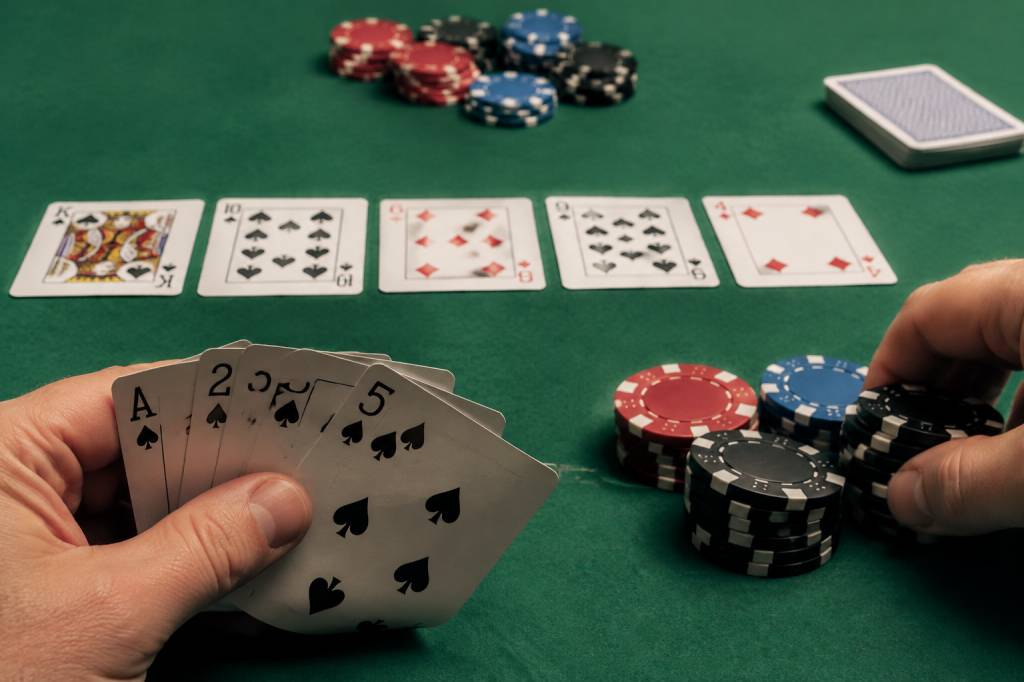
Razz poker is one of those games that looks familiar until you realise the rules have quietly turned the poker table upside down. The best hand is not a pair of aces or a beautifully disguised full house. In Razz, the winner is usually the player holding the lowest five-card hand.
That sounds simple enough, right? Then you are dealt three cards, discover that your “excellent” starting hand contains an ace, a four and a five, and spend the next ten minutes wondering why everyone else is smiling. Razz rewards patience, observation and a willingness to abandon conventional poker instincts. It also punishes anyone who becomes emotionally attached to a pretty hand.
This guide explains how to play Razz, how the betting works, what makes a strong low hand, and which practical habits can help you avoid donating chips to the table. Whether you are completely new to the game or a poker regular looking for a fresh challenge, Razz offers a fascinating test of discipline.
What Is Razz Poker?
Razz is a seven-card stud poker variant. Each player can receive up to seven cards during a hand, but only the best five-card low hand counts at the showdown. Unlike traditional poker, straights and flushes do not count against your hand. Aces are always low, while pairs are harmful because only five different cards can create the strongest low combination.
The ideal Razz hand is known as a “wheel”: A-2-3-4-5. It is the lowest possible hand and cannot be beaten. You will not see one every five minutes, so the real skill lies in judging hands that are strong but imperfect.
A hand such as 7-5-4-3-A is a very respectable low. A hand such as 9-8-6-4-2 can still win, particularly if your opponents are showing worse cards. The key is to compare the highest card first, then the next highest, and so on.
How the Razz Hand Rankings Work
Razz uses a “seven-five low” system. Your final hand is made from the best five cards among the seven you receive. The strongest low hand is determined from the highest card downward.
- A-2-3-4-5 is the best possible hand, often called a wheel.
- A-2-3-4-6 is the next strongest possible low.
- 7-5-4-3-2 beats 7-6-4-3-2 because the second card is lower.
- 8-7-5-4-2 beats 9-4-3-2-A because eight is lower than nine.
- Pairs are counted as duplicated cards, so 6-6-4-3-A is much weaker than 6-5-4-3-A.
When comparing low hands, start with the highest card. If both players have a seven as their highest card, compare the second-highest card. Continue until one hand is lower. This method can feel backwards if you are used to Texas Hold’em, where a pair of aces can make your day. In Razz, a pair of aces is not a gift. It is an awkward little speed bump.
The Basic Rules of Razz
Razz is normally played with two to eight players using a standard 52-card deck. Each hand consists of several dealing rounds, known as streets. The cards are dealt face down or face up depending on the street, and betting takes place after each round.
The usual structure is as follows:
- Third street: Each player receives two cards face down and one card face up. The player showing the highest card posts the bring-in bet.
- Fourth street: Each active player receives another face-up card, followed by a betting round.
- Fifth street: Another face-up card is dealt, followed by betting. In many games, the betting limit increases at this point.
- Sixth street: Players receive one more face-up card and bet again.
- Seventh street: The final card is dealt face down. A last betting round follows.
- Showdown: Remaining players reveal their cards, and the best five-card low hand wins the pot.
The player with the lowest exposed card acts first on later streets. If there is a tie, the suit can be used to determine the order, depending on the house rules. In many traditional formats, suits rank alphabetically from clubs to diamonds, hearts and spades. Always check the rules before playing, because nobody wants to discover a suit-ranking detail after losing a sizeable pot.
The Bring-In and Betting Structure
The bring-in is a forced bet posted by the player with the highest upcard on third street. This is one of Razz’s first strategic twists: showing a high card is bad for your hand, but it may force you to act first and put money into the pot.
In fixed-limit Razz, betting usually takes place in set increments. For example, a £2/£4 game may use £2 bets on the early streets and £4 bets on the later streets. The exact structure varies, but the principle remains the same: pot control matters, and large mistakes can become expensive as the hand develops.
Do not treat the bring-in as an automatic surrender. If your exposed card is high but your hidden cards are excellent, you may still have a playable hand. Equally, do not assume that a low upcard guarantees strength. A player showing a three might secretly be holding a pair of kings. Poker has a sense of humour, and it is rarely aimed at the house.
Choosing Strong Starting Hands
Your starting hand contains two hidden cards and one exposed card. Ideally, you want three different low cards, preferably all eight or lower, with at least one ace, two or three among them.
Excellent starting hands include combinations such as:
- A-2-3
- A-2-5
- A-3-6
- 2-3-5
- 3-4-6
- A-4-5
Hands with three low cards are valuable because they give you multiple ways to improve. A hand like A-2-7 is already a seven-low, while a hand like 3-4-8 has plenty of potential to become a six-low or better.
Hands containing a nine or a ten can sometimes be played if the table is weak or the exposed cards are favourable. However, they should not be treated as premium holdings. Starting with 10-8-3 may look harmless, but you are already carrying a ten and an eight into a game where your opponents may be drawing to sixes and sevens.
Pairs are particularly dangerous. A pair can be hidden, meaning you may not realise how badly your hand has been damaged until later. If you hold A-4-4, you effectively have only two useful low cards. Unless the board develops kindly, your chances of making a competitive hand are limited.
Read the Exposed Cards Before Acting
Razz is an information-heavy game. Every exposed card changes the value of your hand and the likely holdings of your opponents. Before calling or raising, look around the table and ask a few practical questions.
- How many low cards are already visible?
- Are the cards you need still available in the deck?
- Which opponents appear to have completed strong low hands?
- Is your hand better than the cards your opponents are showing?
- Are you drawing to a realistic winning hand or simply hoping for a miracle?
Imagine you hold A-3-6, and your opponent shows 2-4-5. Your hand is promising, but your opponent’s exposed cards are already extremely strong. If you need a particular card to catch up, you may be drawing thin. On the other hand, if several opponents are showing tens, kings and queens, your modest seven-low draw may be in excellent shape.
Card removal is one of Razz’s most important concepts. If you hold two aces and can see another ace in an opponent’s hand, only one ace remains unseen. That reduces your chances of improving. Good Razz players constantly count useful cards instead of staring lovingly at their own hole cards.
Drawing Versus Made Hands
A made low hand is not always better than a draw, but it usually gives you a useful advantage. Suppose you have 7-5-4-2-A after fourth street. That is already a strong five-card low if you can use all five cards, and you still have opportunities to improve. Meanwhile, an opponent showing 3-8-9 may need several perfect cards just to become competitive.
However, the visible cards matter. If your opponent shows 2-3-4 and you show A-5-7, your hand may be behind despite looking respectable. Razz is not about admiring the absolute quality of your cards. It is about comparing your likely final hand with the likely final hands of the players still involved.
When you catch a high card on fourth or fifth street, do not panic automatically. One bad card does not always destroy a hand, particularly if your opponents also catch bricks. But repeated high cards are a warning sign. A hand that goes A-3-6-9-10 is generally heading for the exit unless the table is unusually poor.
When to Bet, Raise or Fold
Bet aggressively when you have a strong low hand and your exposed cards suggest you are ahead. Razz rewards pressure because opponents often have fragile draws. A raise can force players with marginal hands to pay more for the privilege of chasing you.
Raising also has an information benefit. If an opponent calls quickly with a weak-looking board, they may be drawing well underneath. If they re-raise, you should take the warning seriously. Nobody enjoys folding after investing several bets, but stubbornness is not a poker strategy. It is just an expensive personality trait.
Folding is often correct when:
- You have paired one of your key low cards.
- You catch a high card while opponents show strong low boards.
- Your best possible hand is clearly worse than an opponent’s likely made hand.
- You are relying on several perfect cards to continue.
- The pot is contested by multiple players with visibly strong boards.
Do not chase simply because you have already invested chips. Those chips are gone. The only question is whether continuing gives you enough value from this point forward.
Common Razz Mistakes
The most frequent mistake is playing too many starting hands. Razz can look deceptively affordable in a fixed-limit format, but calling several streets with a weak draw adds up quickly. Starting with three low cards does not mean every combination is playable, especially when the cards are poorly connected and lack an ace, two or three.
Another mistake is ignoring opponents’ boards. Some players focus so intensely on improving their own hand that they forget the opponent with A-2-4 showing is probably not waiting around to admire the scenery.
Players also overvalue single cards. Having an ace is helpful, but A-9-K is not a strong Razz hand. The entire combination matters. Three coordinated low cards are far more valuable than one excellent card surrounded by trouble.
Finally, avoid playing emotionally after a bad beat. Razz can produce brutal swings because a strong hand may suddenly catch a pair or an ugly high card. Take a breath, review the exposed cards and make the next decision logically. The deck has not developed a personal grudge, even if it occasionally behaves as though it has.
Practical Tips for Improving at Razz
- Memorise the low-hand rankings: You should be able to compare hands quickly without doing mental gymnastics every showdown.
- Track dead cards: Remember which aces, twos, threes and fours are visible. This improves your decisions dramatically.
- Respect strong boards: An opponent showing three low cards is a serious threat, even before their hidden cards are revealed.
- Value position indirectly: Acting later gives you more information about opponents’ decisions and board strength.
- Control the pot with marginal hands: Not every decent draw deserves a raise.
- Study hand histories: Review hands where you made a pair, caught a high card or continued against a strong board.
- Play within sensible limits: Razz rewards patience, but no strategy can rescue a bankroll that is being pushed too hard.
A Simple Example Hand
You begin with A-3-6, and your three-card board is the lowest visible combination at the table. This is a strong opening hand, so betting or raising is reasonable.
On fourth street, you catch a 9, giving you A-3-6-9. Your hand has not improved, but the nine is not disastrous. If your opponent catches a king while showing 2-4, you may still be in decent shape because their board has worsened relative to yours.
On fifth street, you receive a 2. Now your best available cards are A-2-3-6-9, giving you a nine-low with room to improve. If your opponent catches another high card, continuing aggressively may be profitable.
But imagine instead that your fifth card pairs your six. Your useful combination becomes A-3-6-6-9, and the duplicate six hurts badly. If your opponent is displaying A-2-4-5, folding may be the correct decision, even though your starting hand looked excellent. Razz is a game of evolving information, not loyalty to your first three cards.
Playing Razz Responsibly
Razz is a strategic game, but it is still gambling. Set a budget before you play, understand the betting limits and avoid chasing losses. If the table stops feeling entertaining and starts feeling stressful, stepping away is usually the strongest move available.
With its unusual rankings, exposed information and constant pressure to reassess, Razz offers a refreshing change from standard poker. Learn to respect low cards, watch every board and fold without drama when the hand turns sour. Do that consistently, and you will already be making fewer mistakes than the player who proudly describes a pair of aces as “a promising start.”