Ace high poker: how I play and evaluate this hand like a pro ♠️
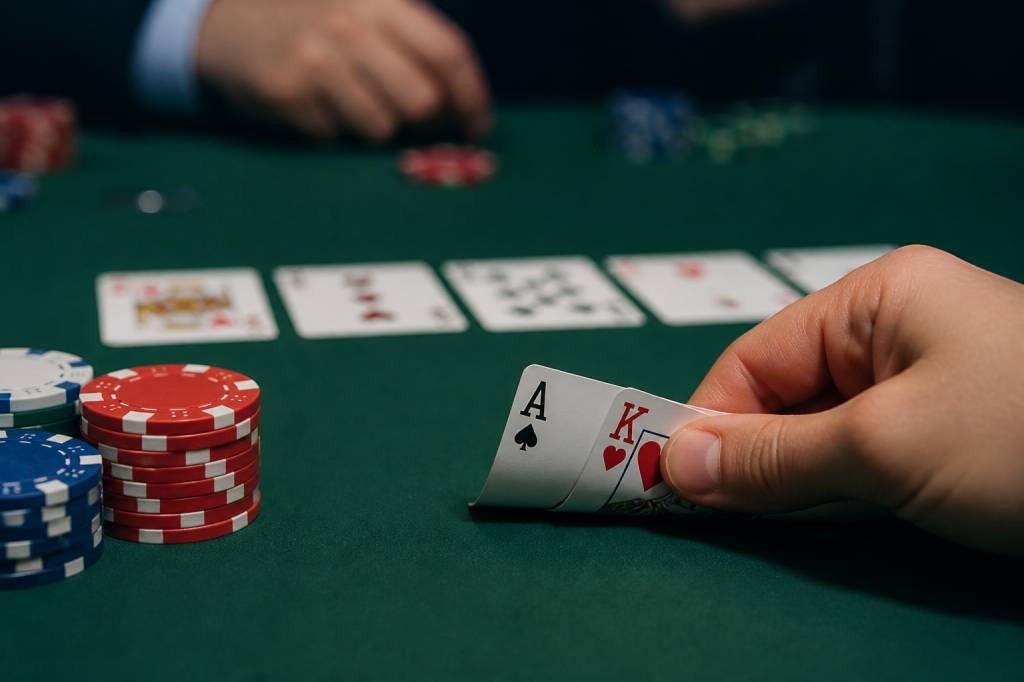
There are poker hands that arrive wearing a tuxedo, and there are hands that turn up in flip-flops pretending they own the casino. Ace high belongs firmly in the second category. It looks respectable, it carries the best possible high card, and yet it can lose to almost anything once the board starts getting creative.
That is precisely why ace high poker hands are so interesting. They are not automatic winners, but they are often strong enough to win a pot with the right decisions. The key is learning to separate the value of the ace from the value of the entire hand, then reading the board, the opponent and the betting action like a professional.
Here is how I evaluate ace high in Texas Hold’em, including when I continue, when I apply pressure and when I quietly let the hand go before it becomes an expensive lesson.
What does ace high actually mean?
A hand is described as “ace high” when it has an ace but does not make a pair, straight, flush or another stronger combination. For example, if your hole cards are A♠ 7♦ and the board is K♣ 10♥ 4♠ 2♦ 9♣, your best five-card hand is ace high: ace, king, ten, nine and seven.
The ace plays as the highest card, but it is still only a high card. That distinction matters. Holding an ace does not mean you have a premium hand. You might have the best high card at the table, or you might be drawing almost dead against a pair, two pair or a made straight.
There is also an important difference between various types of ace high:
- Ace with a strong kicker: A♠ K♦ or A♥ Q♥ can often dominate weaker aces and make top pair with an excellent kicker.
- Ace with a medium kicker: A♣ 9♠ or A♦ 8♣ has some showdown value but becomes more vulnerable.
- Ace with a weak kicker: A♠ 4♦ or A♥ 3♣ may be useful as a bluffing hand, but it is rarely comfortable at showdown.
- Suited ace: A♣ 5♣ has flush potential and can make strong draws, especially on coordinated boards.
- Offsuit ace: A♦ 7♠ has fewer ways to improve and should be handled more cautiously.
So when I see an ace high hand, I do not ask, “Do I have an ace?” I ask, “What else can this hand do?” Poker is rarely impressed by a single shiny card.
Why ace high has hidden value
Ace high is often stronger than it looks because it can win without improving. If your opponent has missed a straight or flush draw, your ace may already be the best hand. This is especially common in heads-up pots where ranges are wider and players continuation-bet too frequently.
There are three main sources of value:
- Showdown value: Your ace may beat missed draws and weaker high-card hands.
- Blocker value: Holding an ace reduces the number of strong ace combinations your opponent can have.
- Drawing potential: A suited ace can improve to a flush, while any ace can make top pair.
Blockers deserve special attention. If I hold A♠, my opponent is less likely to have hands such as A-K, A-Q, A-J or A-10. This does not magically turn a weak hand into a monster, but it can make certain bluffs more attractive. The ace also blocks some of the strongest hands an opponent might use to call a large river bet.
That said, blockers are a tool, not a permission slip to bluff every time you see an ace. I have made that mistake more than once. The ace was blocking strong hands, my confidence was blocking common sense, and my chips were blocking the felt by the end of the hand.
Pre-flop: not every ace deserves a raise
Pre-flop evaluation begins with position, stack depth, table dynamics and the strength of the kicker. A-K, A-Q and A-J are generally strong opening hands, while weaker aces require more discipline.
From early position, I prefer to open tighter. A hand such as A♠ 6♠ may look attractive, but it can create difficult post-flop situations. When you make an ace, you might be out-kicked by A-10, A-J or A-Q. When you miss, you often have little immediate value unless the hand is suited.
From the cutoff or button, weaker suited aces become much more useful. Position allows you to control the pot, apply pressure and realise your equity more effectively. An ace with a small suited kicker can also make disguised flushes and strong wheel straights, such as A-2-3-4-5.
Against a raise, I evaluate whether the ace is strong enough to call, three-bet or fold. A suited ace can be a reasonable call against a late-position open, particularly with deep stacks. An offsuit ace with a weak kicker is often a troublesome bluff-catcher waiting to happen.
One of the most common beginner errors is overvaluing any ace before the flop. The logic is understandable: “I have an ace, and aces are good.” But A♣ 2♦ is not the same animal as A♠ K♠. One is a premium powerhouse; the other may be a speculative hand that needs the right conditions.
Reading the flop with ace high
Once the flop arrives, board texture becomes more important than the fact that you hold an ace. Consider the difference between these boards:
- K♦ 8♣ 3♠: Ace high may be ahead of missed hands and smaller cards. A small continuation bet can work well.
- Q♥ J♥ 9♣: Your ace high is under serious pressure from pairs, straights and draws. Proceed carefully.
- 7♠ 4♦ 2♣: Ace high can often be the best hand, especially against a wide pre-flop range.
- A♣ 7♦ 2♠: You have top pair, not ace high. The kicker now becomes central to your evaluation.
On a dry, low board, ace high may be worth checking to showdown or betting for protection and value against weaker high cards. On a connected board, the same hand may have very little comfort.
I also consider who has the range advantage. A pre-flop raiser often has more strong ace combinations and overpairs. The caller may have more suited connectors and small pairs. On an A-high flop, the raiser can usually apply pressure. On a low, coordinated flop, the caller may have more two pairs, sets and draws.
When I hold a backdoor flush draw or backdoor straight draw, I am more willing to continue with a small bet or call. These extra possibilities matter because they give the hand more ways to improve. Ace high with no backdoor potential is much easier to abandon when the action becomes uncomfortable.
Continuation betting with ace high
Ace high is a natural continuation-bet candidate, but the size and frequency should match the board. On a dry flop that favours my range, I often use a small bet. The aim is not necessarily to make a better hand fold; it is to deny equity to hands such as 6-5, 8-7 or random overcards.
For example, imagine opening from the button with A♣ 5♣ and getting one caller from the big blind. The flop comes K♦ 7♠ 2♥. A small continuation bet can make sense. I have the ace blocker, some showdown value and backdoor possibilities. If called, I can reassess the turn rather than blindly firing every street like a person trying to win a bet with a broken umbrella.
On a flop such as J♠ 10♠ 9♦, I am far less enthusiastic. This board connects strongly with the caller’s range and gives many hands a reason to continue. Betting ace high without a meaningful draw can burn chips quickly.
Checking is not weakness. Sometimes it protects the checking range and allows ace high to reach showdown. If the opponent checks behind, I may win against hands that would have folded to a bet. If they bet the turn, I can evaluate their sizing and the new card.
Calling, raising or folding after facing a bet
When an opponent bets and I hold ace high, I avoid automatic decisions. I ask four practical questions:
- How wide is my opponent’s range?
- Does the board contain many missed draws?
- What hands can I realistically beat?
- Do I have useful blockers or additional outs?
Calling can be correct when the bet is small and the opponent has many bluffs. On a river where a flush draw misses, ace high may be a perfectly reasonable bluff-catcher. The hand does not need to be beautiful; it only needs to beat enough bluffs to justify the call.
Raising with ace high is more situation-dependent. A river raise can work when the board changes dramatically, your ace blocks strong calling hands and your story is credible. For example, if a backdoor flush completes and you hold the ace of that suit, you may represent the flush convincingly.
However, bluff raises need discipline. If your opponent has shown strength on every street, a heroic ace-high raise is usually just an expensive audition for a poker documentary nobody asked to watch.
Folding is correct when the bet is large, the board favours the opponent and you cannot identify enough worse hands. There is no prize for discovering that ace high was technically the best hand after paying three streets of value.
Ace high on the turn and river
The turn is where many ace-high hands reveal their true character. A blank card may strengthen your relative position if your opponent was drawing. A scary card can change the entire balance of the hand.
Suppose the flop is K♣ 8♦ 3♠ and you hold A♥ Q♥. You continuation-bet and receive a call. If the turn is 2♣, your ace high may still be ahead of hands such as Q-J, J-10 or 7-6. A second barrel can pressure those holdings, especially against an opponent who folds too often.
Now imagine the turn is 9♠. That card improves several straight draws and gives your opponent more reasons to continue. Checking becomes more appealing unless you have picked up a useful draw or have a strong read.
On the river, ace high is usually either a bluff-catcher or a bluff. Before betting, I consider whether worse hands will call. If the answer is no, betting for value is not an option. I then ask whether better hands can fold. If they cannot, checking is usually the cleanest play.
Against a missed draw, ace high can win at showdown. That is why turning it into a bluff is not always necessary. Many players see a missed draw and immediately reach for the bet button. Sometimes the best move is to allow the opponent to reveal that their ambitious straight draw was, in fact, ambitious but unsuccessful.
A practical hand example
Let us take A♦ 10♦ on the button in a six-handed cash game. I raise, the big blind calls, and the flop comes Q♣ 7♠ 2♥.
The board is dry, and I have ace high, a backdoor diamond draw and a backdoor straight possibility. I would often make a small continuation bet. If the big blind calls, the turn becomes 3♣. This is a relatively harmless card. I may check back because my hand has reasonable showdown value and the board has not changed much.
The river is 9♥, and my opponent checks. At this point, I beat missed hands such as K-J, K-10, J-10 and 8-6. I lose to any queen, seven, pair of deuces, pocket pair or 9. Checking is likely best because worse hands rarely call a bet, while better hands may call or raise.
Change the river to A♣ and the situation is completely different. I have made top pair with a decent kicker, so betting for value becomes reasonable. The hand did not begin as a premium holding, but careful evaluation allowed it to capture value when the board improved.
The mistakes I avoid with ace high
- Assuming the ace is always good: A weak ace can be dominated, especially in multiway pots.
- Ignoring position: Ace high performs far better when you can act last.
- Over-continuing on coordinated boards: Connected flops give opponents too many ways to improve or already have you beaten.
- Bluffing every missed draw: Sometimes ace high is already the best hand.
- Calling large bets without a plan: A call should have a reason beyond “I have an ace.”
- Forgetting pot size: In a multiway pot, ace high loses value quickly because someone is more likely to have connected.
The strongest habit is to think in ranges rather than individual hands. You do not need to know exactly what your opponent holds. You need to estimate how many better hands, worse hands and bluffs exist in their range, then compare that estimate with the price you are being offered.
Playing ace high with confidence and restraint
Ace high is a hand of information, pressure and patience. It can win pots through a well-timed continuation bet, survive to showdown against missed draws or improve into top pair at exactly the right moment. It can also quietly drain a bankroll when played with too much optimism.
My approach is simple: value the ace, but do not worship it. Check the board texture, consider the opponent’s range, account for position and look for backdoor equity. When the hand has a clear purpose, continue. When it is merely wearing the costume of strength, save the chips.
After all, poker is not about winning every hand that contains an ace. It is about making better decisions than the player across the table. Sometimes that means firing a clever bluff. Sometimes it means calling down with ace high. And sometimes it means folding the prettiest losing hand in the deck before it starts telling you fairy tales.