Free roulette payout chart for smarter bets 🎰
Roulette looks simple: pick a number, place your chips, and wait for the wheel to deliver either glory or a lesson in humility. But beneath the spinning ball is a useful bit of maths. A free roulette payout chart can show exactly what each bet pays, how much of the wheel it covers, and whether you are chasing a sensible return or simply donating to the casino with style.
This guide breaks down the standard roulette bets, compares European and American wheels, and explains how to use the payout chart for smarter decisions. No magic systems, no promises of guaranteed wins, and definitely no claim that a hot streak has a memory. The wheel does not care that your last three spins landed on black.
Roulette payout chart at a glance
The following chart applies to standard roulette tables. “Payout” means the profit from the winning bet, not including the original stake, which is normally returned as well.
| Bet type | Numbers covered | Typical payout | Example with a £10 stake |
|---|---|---|---|
| Straight-up | 1 number | 35:1 | £350 profit + £10 stake |
| Split | 2 numbers | 17:1 | £170 profit + £10 stake |
| Street | 3 numbers | 11:1 | £110 profit + £10 stake |
| Corner | 4 numbers | 8:1 | £80 profit + £10 stake |
| Six line | 6 numbers | 5:1 | £50 profit + £10 stake |
| Dozen or column | 12 numbers | 2:1 | £20 profit + £10 stake |
| Red/black, odd/even, 1–18/19–36 | 18 numbers | 1:1 | £10 profit + £10 stake |
At first glance, the payouts appear to make perfect sense. A straight-up bet covers one number and pays the most. An even-money bet covers 18 numbers and pays the least. That relationship is important, but it does not mean every wager offers the same practical experience. Coverage, volatility, and house edge all matter.
How roulette payouts actually work
Imagine placing £10 on number 17. If the ball lands on 17, the standard payout is 35:1. You receive £350 in winnings and your original £10 stake is returned, giving you £360 in total. If the ball lands anywhere else, the £10 stake disappears into the casino’s very well-organised pocket.
Now compare that with £10 on red. A winning even-money bet gives you £10 profit, plus your £10 stake back. It feels less dramatic, but it wins more often than a straight-up number bet because there are 18 red pockets on a European wheel.
Here is the key detail: payouts are not quite as generous as the true odds of each bet. On a European wheel, a straight-up number has a theoretical fair payout of 36:1 because there are 37 pockets. The casino pays 35:1 instead. That small difference is the house edge doing its quiet little dance.
Inside the standard roulette bets
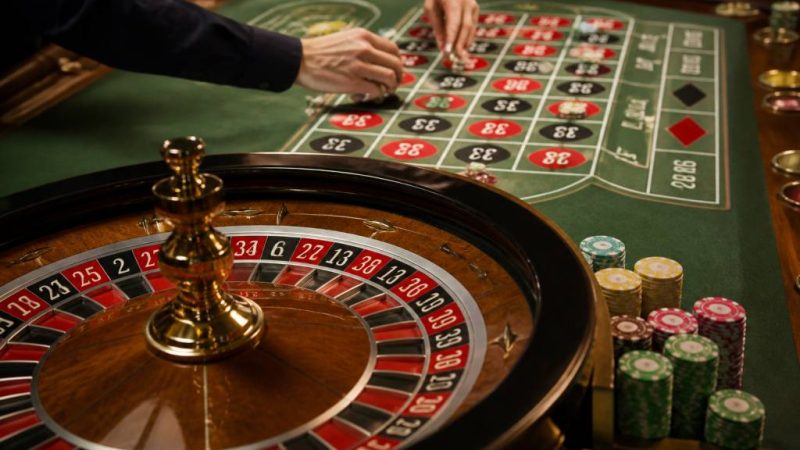
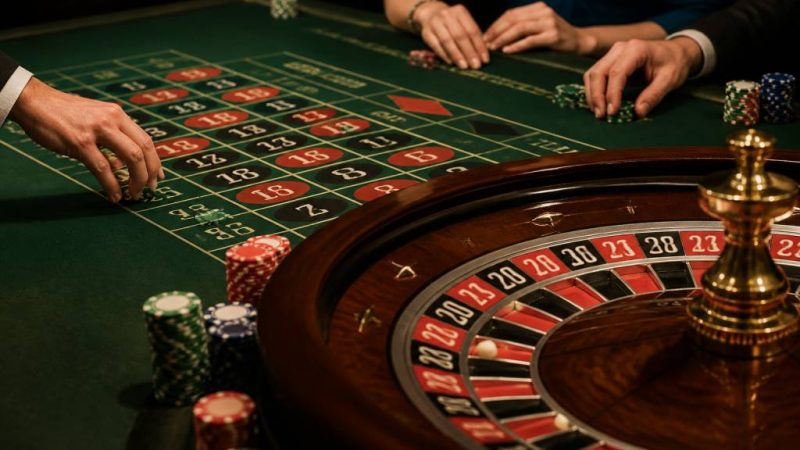
Understanding the table layout makes the chart much easier to use. Every bet belongs to one of two broad groups: inside bets and outside bets.
- Straight-up: A chip placed directly on one number. It is the highest-volatility bet and pays 35:1.
- Split: A chip placed on the line between two neighbouring numbers. It pays 17:1.
- Street: A bet covering a row of three numbers, such as 4, 5, and 6. It pays 11:1.
- Corner: A bet placed at the intersection of four numbers, such as 1, 2, 4, and 5. It pays 8:1.
- Six line: A wager covering two adjacent rows, or six numbers in total. It pays 5:1.
- Dozen: A bet on 1–12, 13–24, or 25–36. It pays 2:1.
- Column: A wager on one of the three vertical columns of numbers. It also pays 2:1.
- Even-money bets: Red/black, odd/even, and 1–18/19–36. These pay 1:1.
The zero is not red or black, odd or even, or low or high. On an American wheel, the double zero creates an additional pocket and makes those outside bets even less attractive.
European roulette versus American roulette
If you have a choice, the wheel format matters more than most betting systems. European roulette has 37 pockets: numbers 1 through 36 plus a single zero. American roulette has 38 pockets because it includes both 0 and 00.
That extra zero is not decorative. It increases the standard house edge from approximately 2.70% on European roulette to approximately 5.26% on American roulette.
| Wheel type | Pockets | Standard house edge |
|---|---|---|
| European | 37 | 2.70% |
| American | 38 | 5.26% |
Using a simple example, suppose you bet £10 on black for 100 spins. The amount wagered is £1,000. The theoretical average loss is around £27 on a European wheel and roughly £53 on an American wheel. Actual results can be far higher or lower over a short session, of course. Roulette is perfectly capable of turning a probability lesson into a personal drama.
Some European or French-style tables offer the La Partage or En Prison rules on even-money bets. When the ball lands on zero, you may lose only half your stake or have the wager held for the next spin. These rules can reduce the house edge on even-money bets to around 1.35%, making them worth checking before you place a chip.
Why the biggest payout is not the best bet
A 35:1 payout looks irresistible. It is the roulette equivalent of hearing a mysterious noise in the attic and deciding to investigate alone. However, a straight-up bet also wins only when one specific pocket appears.
On a European wheel, the chance of hitting one chosen number is 1 in 37, or about 2.70%. The payout is 35:1 rather than the fair 36:1, which creates the same long-term house edge as most standard bets.
Betting on red does not remove the house edge. It simply produces smaller wins more frequently. There are 18 red pockets, but the zero still loses the bet. That means red wins on 18 of 37 pockets, while the casino wins when black or zero appears.
This is why payout size and value are different ideas. A larger potential return usually comes with greater variance. If you prefer occasional large wins and can accept long losing stretches, inside bets may suit your entertainment budget. If you want a steadier session, outside bets can create a less violent ride, though they remain negative-expectation wagers.
Using the chart to plan a roulette budget
A payout chart becomes more useful when paired with a clear staking plan. Start by deciding how much you are comfortable losing before the session begins. That amount should be entertainment money, not rent money, bill money, or the cash you promised yourself you would save after your last poker adventure.
- Set a fixed session budget: Once it is gone, stop. Do not reload simply because the wheel “owes” you.
- Choose a unit size: A unit might be 1% to 5% of your session budget, depending on your risk tolerance.
- Avoid chasing losses: Increasing a bet after losing does not change the probability of the next spin.
- Keep the stake consistent: Flat betting makes it easier to track your results and prevents emotional decisions.
- Set a win target: A modest profit target can help you leave while the session is still enjoyable.
- Use limits: Online casinos and gambling apps often offer deposit, loss, and session-time controls. They are tools, not insults.
For example, with a £100 budget, you might choose a £2 unit. You could place £2 on an outside bet, or split that amount across a few straight-up numbers if you want more volatility. The important point is that the total exposure remains within your plan.
Popular roulette betting systems and their limits
The Martingale system suggests doubling your stake after every loss on an even-money bet. The theory is that one eventual win will recover previous losses and produce a small profit. In practice, table limits, bankroll limits, and losing streaks turn this plan into a very expensive staircase.
Suppose you begin with £5. After six consecutive losses, the next required stake would be £320. Your total amount committed by that point would be £315, and the next loss would require £640. The wheel has not become more likely to show red; your bet has simply become more desperate.
Other systems, such as the D’Alembert, Fibonacci, and Labouchère, change the pattern of your stakes but do not remove the house edge. They may help organise play, but organisation should not be confused with an advantage.
A smarter approach is to treat these systems as budgeting frameworks rather than prediction machines. If a strategy encourages larger bets after losses, ask one blunt question: Would I still make this wager if the previous spin had never happened? If the answer is no, emotion may be holding the chips.
A practical example with the payout chart
Let us imagine a £30 session budget on European roulette. You decide that each unit is £2 and choose three types of wager:
- £2 on red: A win produces £2 profit.
- £2 on the 1–12 dozen: A win produces £4 profit.
- £2 on number 17: A win produces £70 profit.
If red wins, the red bet pays £2 profit, while the dozen and number bets lose. If 17 appears, the straight-up bet produces £70 profit, and the red bet also wins because 17 is red. That is a thrilling result, but it is not evidence that 17 is “due” or that your combination has found a secret loophole.
There is also a practical warning here: combining bets can increase your total stake quickly. A £2 wager may seem harmless, but five separate £2 bets mean £10 on one spin. Always calculate the complete amount at risk before the ball is released.
Common payout mistakes to avoid
Roulette terminology is fairly friendly, but a few errors appear regularly at both physical and online tables.
- Confusing profit with total return: A 2:1 bet on £10 returns £30 in total: £20 profit plus the £10 stake.
- Forgetting the zero: Zero is a separate pocket and normally defeats standard even-money bets.
- Assuming neighbouring numbers are more likely: A split covers two numbers, but the wheel does not favour them because they sit next to each other on the layout.
- Ignoring the wheel type: American roulette usually offers worse mathematical value than European roulette.
- Believing recent results predict the next spin: Five blacks do not make red more likely on spin six.
- Overlooking table limits: A betting system may require stakes that the table will not accept.
How to make smarter roulette bets
There is no standard roulette bet with a positive long-term expectation, but you can still make more informed choices. Select a European or French table where possible, check the rules before playing, and understand precisely what each chip can win.
Use inside bets when you genuinely enjoy high variance, not because a number appeared in a dream. Use outside bets when you prefer frequent small outcomes, while remembering that the zero remains part of the equation. Keep your stakes modest, avoid chasing, and record your results if you want an honest view of your play.
Most importantly, let the payout chart inform your decisions rather than seduce you into bigger bets. The 35:1 straight-up payout is exciting, but excitement is not the same thing as value. Roulette is best treated as paid entertainment with transparent mathematics—preferably enjoyed with a budget, a sense of humour, and the discipline to walk away before the wheel starts looking personally offended.
If gambling stops feeling fun or begins to interfere with money, work, or relationships, take a break and use the responsible gambling support available in your country. The smartest bet is often the one that keeps the game in its proper place.