Cheat sheet for Texas hold’em: a simple guide to poker rules and winning strategies ♠️
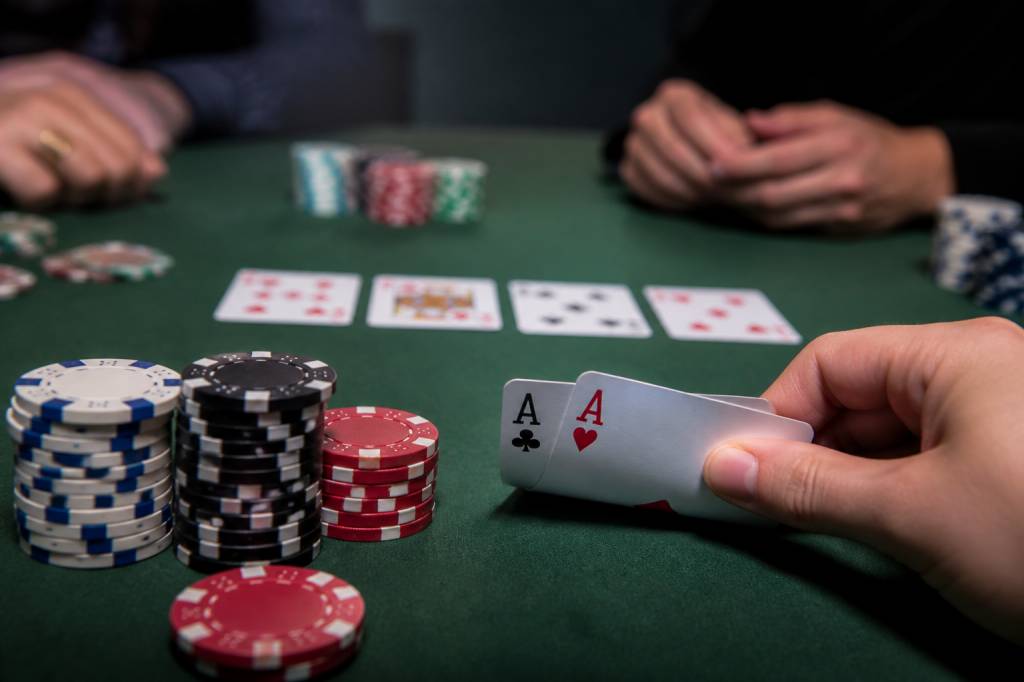
Texas hold’em looks simple on the surface: two private cards, five community cards, and a pile of chips waiting for someone brave enough to claim it. Yet behind that friendly structure sits a game of timing, probability, psychology and, occasionally, spectacularly bad decisions. I once called an all-in with a pair of threes because “the board felt lucky”. It did not. The board had no feelings whatsoever.
This cheat sheet gives you the essential Texas hold’em rules, hand rankings and practical strategies you need to play with confidence. Whether you are learning the game or trying to stop donating chips to the most aggressive player at the table, keep this guide close.
The basic aim of Texas hold’em
Every player receives two private cards, known as hole cards. Five shared cards are then dealt face up in the middle of the table. Your task is to make the strongest possible five-card poker hand using any combination of your two hole cards and the community cards.
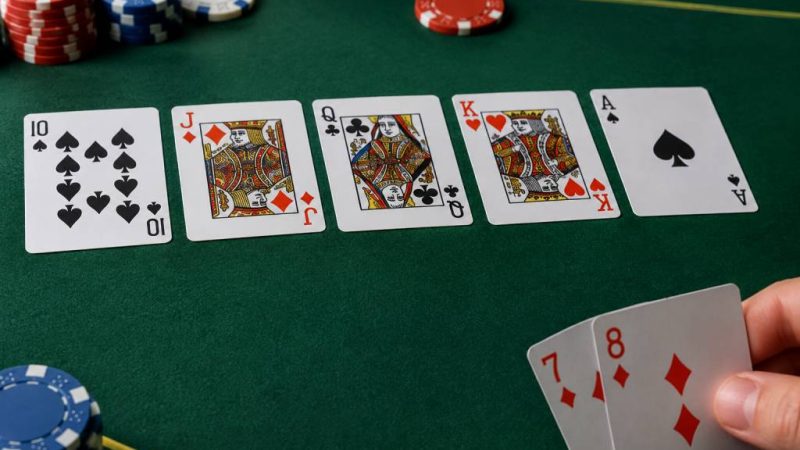
You can use both hole cards, one, or neither. This detail catches new players surprisingly often. If the board itself shows the best five-card hand, everyone still playing has the same hand. Your ace-high kicker does not magically improve a shared straight.
You can win a pot in two ways:
- Show the best hand at the end of the final betting round.
- Make every opponent fold before the showdown.
The second method is where poker becomes more than a card-ranking exercise. A modest hand with the right bet at the right time can beat a stronger hand that never gets the chance to reach showdown.
How a hand is dealt
Texas hold’em follows a clear sequence. Understanding the order makes the game much easier to follow, especially when the table suddenly turns into a small financial courtroom.
- The button: A dealer button marks the theoretical dealer position and moves clockwise after every hand.
- Small blind: The player immediately left of the button posts a forced bet.
- Big blind: The next player posts the larger forced bet, usually twice the small blind.
- Pre-flop: Each player receives two hole cards. Betting begins with the player left of the big blind.
- The flop: Three community cards are dealt face up, followed by a betting round.
- The turn: A fourth community card appears, followed by another betting round.
- The river: The fifth and final community card is dealt, followed by the last betting round.
- The showdown: Remaining players reveal their cards and the best five-card hand wins.
On the flop, turn and river, action begins with the first active player left of the button. If nobody has bet, a player may check. If a bet has been made, you must call, raise or fold.
Texas hold’em hand rankings
Memorise these rankings before playing for real money. Confusing a flush with a full house is an expensive way to learn basic vocabulary.
- Royal flush: A, K, Q, J and 10 of the same suit.
- Straight flush: Five consecutive cards of the same suit.
- Four of a kind: Four cards of the same rank.
- Full house: Three cards of one rank and two cards of another.
- Flush: Five cards of the same suit, not in sequence.
- Straight: Five consecutive cards of mixed or matching suits.
- Three of a kind: Three cards of the same rank.
- Two pair: Two cards of one rank and two cards of another.
- One pair: Two cards of the same rank.
- High card: When nobody has a made hand, the highest card plays.
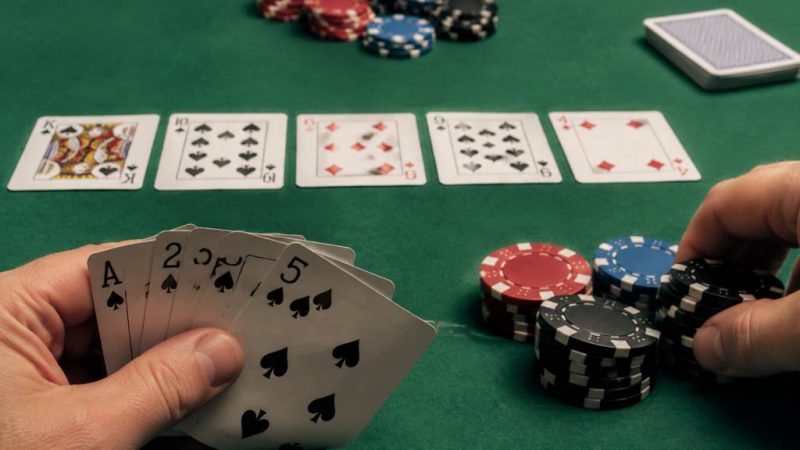
An ace can be high or low in a straight. A-2-3-4-5 is a five-high straight, often called the wheel. It is still a straight, although it is not quite as glamorous as A-K-Q-J-10.
Actions you can take
Every decision at the table belongs to one of a few categories:
- Fold: Give up your hand and forfeit any chips already invested.
- Check: Pass the action without betting, provided nobody has bet before you.
- Call: Match the current bet.
- Bet: Place the first wager in a betting round.
- Raise: Increase an existing bet.
- Re-raise: Raise after another player has already raised.
- All-in: Commit all your remaining chips.
One of the most useful beginner habits is to stop thinking, “I already put money in, so I have to continue.” Those chips are gone. The only question is whether calling now is profitable. Poker punishes emotional accounting with the enthusiasm of a tax inspector.
Starting hands: play fewer, play better
Your first major strategic decision arrives before the flop. The strength of your starting hand matters, but position and table behaviour matter too.
The strongest premium hands include pocket aces, pocket kings, pocket queens and ace-king suited. These hands deserve aggressive action in most situations, although even aces can lose. They are a strong beginning, not a legally binding guarantee of victory.
Good playable hands often include:
- Medium and high pocket pairs, such as 10-10, 9-9 and 8-8.
- Strong aces, especially A-Q, A-J and A-10 suited.
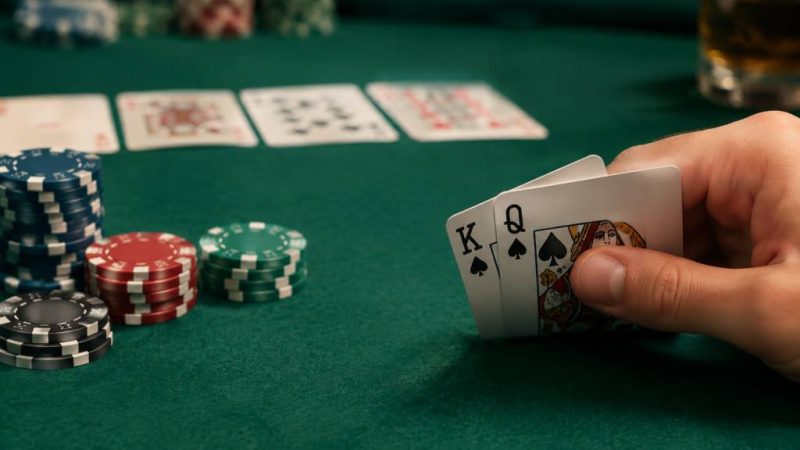
- Suited broadway cards, such as K-Q suited and Q-J suited.
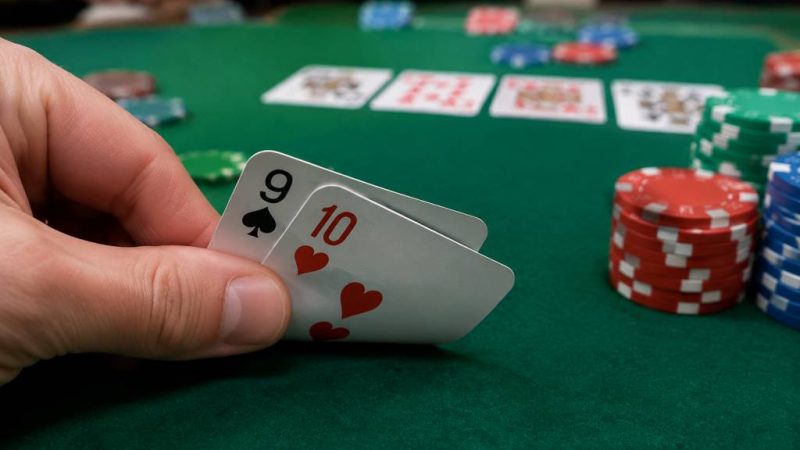
- Suited connectors, such as 9-8 suited, when the price and position are favourable.
Weak hands become dangerous when they look attractive for the wrong reason. A-7 offsuit contains an ace, but the seven creates many awkward situations. If another player holds A-K, A-Q or A-J, you may be dominated. A flashy ace is not automatically a good ace.
Position: the quiet advantage
Position describes when you act during a betting round. Players who act later have more information because they have seen what opponents do first. This advantage is so important that a mediocre hand in late position can be more profitable than a decent hand played early.
Early position requires caution. Several players still have the chance to wake up with a strong hand behind you, so open with a tighter range.
Middle position gives you more flexibility, although you should still respect players yet to act.
Late position, particularly the button, is where you can apply pressure. If everyone folds to you, raising with a reasonable range may win the blinds immediately.
The blinds are awkward because you have already invested chips but must act out of position after the flop. Defend them selectively rather than treating every small suited hand as a personal challenge from the poker gods.
Reading the board
Do not look only at your own cards. Ask what the community cards allow your opponents to hold.
A board such as K-8-3 rainbow is relatively dry. There are few obvious draws, so a strong king may remain valuable. A board such as J-10-9 with two cards of the same suit is highly coordinated. Straights, flushes and strong draws are all possible, so one-pair hands become much less comfortable.
Useful questions include:
- Are there possible straights or flushes?
- Did the latest card complete an obvious draw?
- Which stronger hands would realistically call before the flop?
- Does my hand improve against the range I believe my opponent has?
- Am I betting for value, as a bluff, or simply because I dislike checking?
That final question has saved me from more than one unnecessary bet. “I hate checking” is not a strategy. It is usually a warning sign wearing sunglasses.
Pot odds and drawing hands
You do not need to become a mathematics professor to use pot odds. The basic idea is simple: compare the cost of calling with the potential reward.
Imagine the pot contains £40 and your opponent bets £20. You must call £20 to compete for a final pot of £80. Your call needs to succeed often enough to justify paying £20 for that opportunity. In percentage terms, you need roughly 25% equity, assuming no further betting and ignoring rake.
When chasing a draw, count your outs. An out is a card that should improve your hand to what you believe is the winner. A flush draw usually has nine outs after the flop. A straight draw may have eight outs if you hold an open-ended draw.
A quick rule of thumb is the “rule of four and two”:
- With two cards still to come, multiply your outs by four.
- With one card still to come, multiply your outs by two.
Eight outs after the flop are worth roughly 32% by the river, or about 16% from the turn to the river. It is not exact, but it is close enough for quick decisions at a live table or online game.
Be careful with dirty outs. A card that completes your draw may also complete an even stronger draw for your opponent. A king that gives you top pair is not necessarily a winning card if the board also creates a flush or straight.
Bet sizing that makes sense
Good bet sizing communicates a consistent story. It should reflect the board, your range and your objective rather than your mood.
- Pre-flop open: A common starting point is 2 to 3 big blinds online, adjusted for table conditions.
- Continuation bet: On a dry flop, a smaller bet may work. On a coordinated flop, stronger protection and value may require more.
- Value bet: Bet an amount that worse hands can realistically call.
- Bluff: Choose a size that gives opponents a difficult decision while risking as little as necessary.
- Protection: Do not inflate the pot purely to “protect” a hand that cannot tolerate any action.
Betting half the pot does not become correct merely because it is your favourite button. Think about what you want to achieve before selecting the amount.
Bluffing without setting your chips on fire
Successful bluffs usually have three ingredients: a believable story, a favourable board and an opponent capable of folding. Bluffing a player who calls every street with second pair is not courageous. It is charitable.
Good bluff opportunities often arise when:
- You have position.
- Your hand blocks strong combinations your opponent could hold.
- The board favours your perceived range.
- Your opponent has shown weakness through checking or calling.
- You can apply pressure on later streets.
Semi-bluffs are especially useful. When you bet with a drawing hand, you can win immediately if your opponent folds or improve if called. A flush draw with overcards, for example, may have several ways to succeed.
Simple tells and table awareness
Online poker removes many physical tells, but betting patterns remain revealing. Watch how quickly opponents act, how much they bet and whether their sizes change with the strength of their hands.
At a live table, avoid dramatic detective work. A trembling hand does not always mean weakness; it may simply mean the player has consumed too much coffee. Look for repeated patterns rather than one theatrical gesture.
Most importantly, observe your own habits. Do you raise larger with strong hands? Do you check quickly when giving up? Do you call too often after missing a draw? The easiest opponent to read is frequently the person staring back from the screen.
Bankroll discipline and table etiquette
Winning strategy means little if one unlucky session destroys your bankroll. Play stakes you can afford, set limits before you begin and never chase losses. A bad night does not become profitable because you play longer while angry.
- Separate poker money from essential spending.
- Take breaks after large losses or emotional decisions.
- Do not play tired, intoxicated or distracted.
- Use responsible gambling tools where available.
- Review hands instead of blaming every defeat on bad luck.
At live tables, act in turn, protect your cards and avoid revealing information while a hand is still active. Do not criticise another player’s decision. They may be making a mistake, and you want them to continue making it.
A practical hand checklist
When facing a decision, run through this quick list:
- What are my hole cards and how strong are they relative to the action?
- What is my position?
- How many opponents remain?
- What hands could my opponent realistically have?
- What does the board threaten?
- Am I ahead, drawing, bluffing or simply hoping?
- What action gives me the best expected result?
If you can answer those questions calmly, you are already making better decisions than the player who announces, “I have a feeling,” before calling three streets.
Final reminders for the table
Play tight before the flop, use position aggressively, value strong hands and respect coordinated boards. Do not fall in love with one pair, and do not confuse activity with progress. Folding is not weakness; it is how you preserve ammunition for a better spot.
Texas hold’em rewards patience, observation and disciplined aggression. You will still lose hands with pocket aces. You will still watch a perfect flop arrive one seat too late. That is part of the game. The goal is not to win every hand, but to make decisions that remain profitable over hundreds and thousands of hands.
Keep this cheat sheet nearby, review your biggest mistakes honestly and remember: the cards may deal the story, but your decisions write the ending.